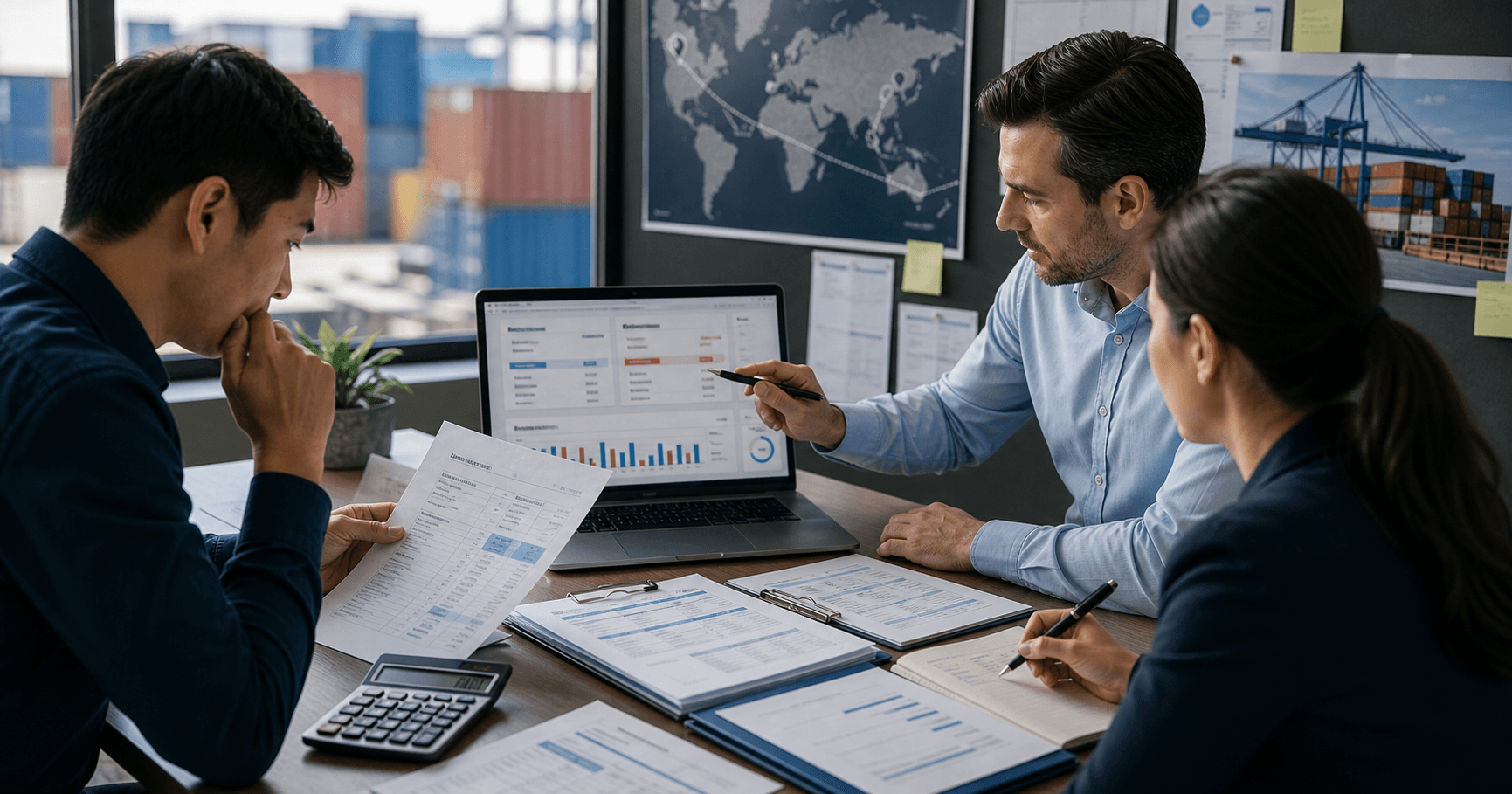
Customs clearance is one of the biggest pain points in international shipping. Delays, unexpected duties, and documentation errors cost businesses billions every year. This comprehensive guide walks you through every step of the customs clearance process.
What Is Customs Clearance?
Customs clearance is the official process of getting permission from a country customs authority to bring goods into (import) or take goods out of (export) that country. Without clearance, your cargo cannot legally cross a border and errors can result in delays, penalties, or seizure of goods.
The Customs Clearance Process Step by Step
- Document preparation — Gather all required documents: commercial invoice, packing list, bill of lading or air waybill, certificate of origin, and any special permits.
- HS code classification — Every product must be classified under the Harmonised System code, which determines the applicable duty rate.
- Customs declaration — Submit the import or export declaration to the customs authority electronically through a customs broker or freight forwarder.
- Duty and tax assessment — Customs calculates duties based on the declared value and HS code. VAT and other taxes may also apply.
- Payment — Duties and taxes must be paid before goods are released.
- Inspection — Customs may physically inspect the goods or require additional documentation.
- Release and delivery — Once cleared, the cargo is released to the importer for collection or onward delivery.
Essential Import/Export Documents
- Commercial Invoice — Lists the buyer, seller, goods description, quantity, value, and incoterm. The most critical customs document.
- Packing List — Details the contents, weight, and dimensions of each package.
- Bill of Lading or Air Waybill — The transport contract and receipt of goods issued by the carrier.
- Certificate of Origin — Certifies where the goods were manufactured, affecting duty rates under free trade agreements.
- Import Licence — Required for controlled goods such as chemicals, firearms, food products, and medicines.
Understanding HS Codes
The Harmonised System is a global product classification system developed by the World Customs Organisation. Every traded product has a unique HS code determining its duty rate in every country. Classifying goods under the wrong HS code is one of the most costly mistakes in international trade. Always work with a licensed customs broker to confirm your classification before shipping.
Incoterms 2020: Who Is Responsible for Customs?
- EXW (Ex Works) — The buyer handles all customs, export, and import formalities.
- FOB (Free on Board) — The seller handles export customs; the buyer handles import customs.
- CIF (Cost, Insurance and Freight) — Seller handles export and main carriage; buyer handles import customs.
- DDP (Delivered Duty Paid) — The seller handles all customs, duties, and delivery to the buyer door.
Common Customs Clearance Mistakes
- Undervaluing goods on the commercial invoice
- Incorrect or missing country of origin declaration
- Using the wrong HS code
- Missing or inconsistent documentation
- Failing to obtain required import licences in advance
Trade Compliance: Beyond Clearance
Customs clearance is one part of a broader trade compliance programme. Businesses shipping internationally must also consider export controls and sanctions, anti-dumping duties, free trade agreement eligibility, and record-keeping requirements (most customs authorities require records to be retained for 5-7 years).